Bank Transfer Casino Withdrawals – Reviewed & Ranked
Compare bank transfer withdrawal times and limits for Australian players. Learn about Osko processing speed, KYC requirements, and how to avoid payout delays.
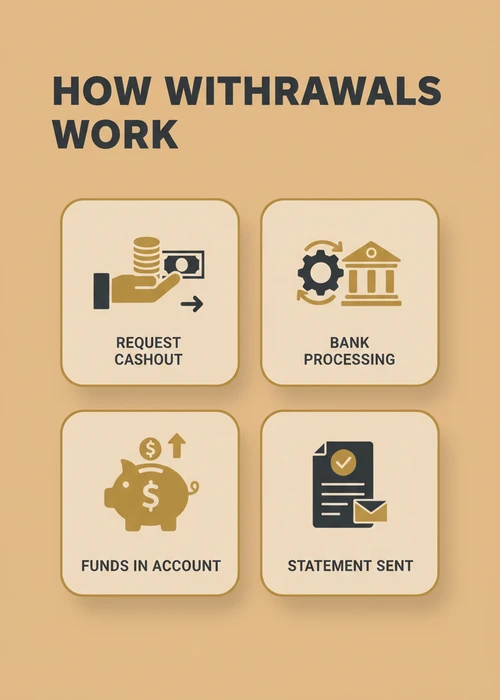
The idea that a bank transfer casino withdrawal must always be a multi-day affair is a common misconception among many Australian players. While traditional bank transfers can still take several business days, the adoption of Osko and PayID has significantly reduced expected wait times for those using compatible platforms. Dozens of operator workflows were inspected to map how internal approval queues actually interact with Osko and PayID at the rail level. Most operators here maintain a clear structure around minimums and daily limits, though specific tiers often apply to high-volume users. This section breaks down the actual mechanics of cashing out, from initial request to final settlement.
01
Jeetcity Casino
4.9
Card players can pay by Visa, while PayID, Neosurf and 10+ cryptos round out the methods
Quick exits — withdrawals over PayID or crypto wrap up in under a day for verified accounts
150-plus software houses — Evolution and Nolimit City included — stock a lobby of over 6,000 games
Welcome bonus
100% up to A$7,500 + 100 FS!
Curaçao (GCB)—A$30 min deposit—0–24h crypto/PayID withdrawal—6,000+ games
While many believe direct bank transfers are always the slowest method, Osko-enabled withdrawals in Australia can settle in under 60 seconds. However, standard bank transfers still typically require 1-3 business days for processing after approval. This disparity often leads players to underestimate the importance of choosing an operator that truly supports real-time rails rather than just claiming fast payouts in marketing materials. In practice, the time to funds is the sum of the operator's internal review and the banking network's settlement time.
A typical timeline involves a request being flagged for manual review, which can take anywhere from 24 to 72 hours. Once approved, if the platform utilises the New Payments Platform (NPP), funds move almost instantly to the nominated bank account. Without NPP support, the transaction is processed via traditional batch systems, adding further delay. Understanding this two-stage process helps set realistic expectations and reduces unnecessary support enquiries during the waiting period.
It is also important to note that these timelines are closely monitored by the Australian Communications and Media Authority (ACMA), which oversees the compliance of interactive gambling operations. This ensures that payment processing adheres to local regulations and consumer protections. Players can learn more about their rights and the oversight of online gambling on the ACMA official website.
Comparing the Fastest Payout Options for AU Players
Osko and PayID withdrawals can be processed in less than a minute once the operator approves the request. Traditional bank transfers often take between 1 to 3 business days to reflect in your account.
This comparison highlights how different operators handle bank transfer payouts, with a clear distinction between real-time rails and standard processing. Reviewing these figures allows players to select a platform that aligns with their desired payout speed.
Withdrawal Limits and Processing Tiers
Standard withdrawal limits often start at $2,000 per day, with VIP tiers extending up to $10,000. Minimum withdrawal amounts are typically set around $20 across most platforms. These figures are foundational for planning payouts and understanding the boundaries of each platform's financial processing capacity.
The table below details the specific limits and tiers observed across several leading operators, illustrating how limits scale with player loyalty levels.
Operator Type
Min. Withdrawal (AUD)
Standard Daily Limit (AUD)
VIP Daily Limit (AUD)
Tier 1 Weekly Limit (AUD)
Tier 2 Weekly Limit (AUD)
Tier 3 Weekly Limit (AUD)
Monthly Cap (AUD)
Standard Offshore
20
2000
5000
7000
10000
15000
25000
Tier-1 Licensed
50
2500
7500
12000
18000
25000
50000
High-Limit Focus
100
5000
15000
20000
30000
50000
100000
Mobile-First
25
1500
4000
6000
9000
12000
20000
Boutique Platform
30
1000
3000
5000
7500
10000
15000
These limits show that while base tiers are accessible, higher-volume players benefit significantly from increased caps. It is recommended to check the specific terms for your account tier before requesting large sums.
Common Questions About Cashing Out to Your Bank
Most bank transfer withdrawals are free of charge from the operator side, although banks may apply fees. Fees for accepting payments are rare in Australia but can occur with certain account types. Understanding these cost structures helps prevent surprises when funds land in your account.
Fees applied by the operator: Most platforms do not charge fees for bank transfer withdrawals, making it one of the most cost-effective cashing-out methods. Players should always confirm this in the cashier section before initiating a request.
Bank-side charges: While uncommon, some banks may apply a small fee for incoming transactions, especially if they are marked as non-Osko. These are typically under $5 per transaction and depend on the individual bank's policy.
Currency conversion costs: If the platform processes payments in USD, your bank will apply a conversion rate and potentially a fee. Using a multi-currency account or a fintech service can help manage these costs more effectively.
Impact on processing speed: While fees themselves don't delay payouts, the method chosen can. Choosing Osko-compatible checks can ensure faster processing compared to traditional bank transfers, even if both are free.
Transparency of charges: Reputable sites will clearly state any potential fees before you confirm a withdrawal. Always review the confirmation screen for the final amount to be transferred to your bank account.
For players who prioritise low-cost transactions, bank transfers remain a top choice. Comparing multiple bank transfer casino options can reveal even more fee-free alternatives.
Security Measures for Every Withdrawal Request
Two-factor authentication (2FA) is mandatory for most secure withdrawals to prevent unauthorised access. Encrypted SSL connections protect all financial data during the transaction process. These security layers are essential for safeguarding both player funds and personal information during every cash-out request.
Beyond encryption and 2FA, many platforms employ advanced fraud detection systems that monitor for unusual patterns. This includes cross-checking the nominated bank account holder's name with the account holder's name registered on the platform. Such measures help prevent money laundering and protect players from potential fraud, ensuring that funds are always sent to the correct recipient.
Furthermore, casinos often implement internal review processes before approving any withdrawal. This might include checking for adherence to bonus wagering requirements or verifying recent activity for compliance with responsible gambling policies. These steps, while sometimes perceived as a delay, are critical for maintaining a secure and fair gambling environment for all users.
Understanding Australian Regulatory Oversight
The Australian Communications and Media Authority (ACMA) manages the Interactive Gambling Act to regulate online gaming. Many casinos also hold licences from recognised international bodies such as Curaçao eGaming or the Anjouan Gaming Authority. This multi-layered oversight helps ensure that operators adhere to strict standards regarding player safety and financial integrity.
These regulatory frameworks require operators to implement reliable KYC (Know Your Customer) and AML (Anti-Money Laundering) procedures. Such compliance measures are designed to protect players from fraud and to prevent illicit activities. Players can access support and resources related to safe gambling through the BetStop self-exclusion register, which is a key part of Australian responsible gambling efforts.
The Role of the Interactive Gambling Act
The Australian Communications and Media Authority (ACMA) manages the Interactive Gambling Act to regulate online gaming. This framework helps ensure compliance and player protection within the Australian market.
International Licensing Oversight
Many online casinos operating in Australia hold licences from recognised international bodies such as Curaçao eGaming or the Anjouan Gaming Authority. These licences require operators to adhere to strict fairness and security standards.
For a broader perspective on how various payment methods compare, check the PayID vs bank transfer guide, which details their respective strengths in the Australian context.
Avoiding Common Withdrawal Delays
Incorrect bank details can cause withdrawal delays and may require resubmitting the request. Internal approval processes at many operators typically take between 24 and 72 hours before a transfer is sent. Ensuring accuracy and understanding these timelines can significantly smoothen the process.
Another frequent cause of delays is incomplete KYC verification. Many platforms require a government-issued ID and proof of address before the first withdrawal can be processed. Submitting clear, up-to-date documents early in your account history can prevent unexpected holds when you're ready to cash out winnings. This proactive approach saves time and reduces frustration.
Finally, players should be aware of potential issues related to payment method mismatches. Some sites require withdrawals to be made using the same method used for deposits. Using an alternative method may trigger additional security checks and prolong the processing period. Always review the specific policy on withdrawal methods to ensure a seamless experience.
Your Rights When a Bank Transfer Goes Wrong: AFCA, the Bank, or the Operator
The longer a withdrawal sits in limbo, the harder it is to tell who is actually responsible — and most players burn weeks emailing casino support when the dispute belongs in a different jurisdiction entirely. The deciding question is straightforward: was an Australian bank a party to the failed leg of the transfer? If yes, the Australian Financial Complaints Authority (AFCA) has jurisdiction over your bank, complaints are free, and the bank is required to respond. If no — the failure is entirely on the operator's side, with no AU bank touching the broken step — AFCA cannot help, and the only escalations are chargebacks (if a card was used) or the operator's own licensing regulator. The matrix below maps the three most common withdrawal-failure scenarios.
Scenario
Who is responsible
AFCA jurisdiction
Time limit to lodge
Practical first step
A. BPAY or direct EFT clears your bank but the operator says funds never arrived
Bank's reconciliation, payment processor, or aggregator suspense ledger
Yes — bank is a party to the failed leg
Within 6 years of the disputed transaction; complaint to AFCA after the bank fails to resolve within reasonable time
Lodge a written complaint with your bank citing the BPAY receipt or BSB transaction reference; escalate to AFCA if the bank does not resolve within 30 days
B. Bank declines your withdrawal-credit or your deposit with no stated reason
Bank's payment-control or fraud-screening layer
Yes — bank's decision is the disputed action
Within 2 years of becoming aware of the decision
Request a written reason from your bank; if the explanation is missing or unsatisfactory, file with AFCA citing the bank's failure to provide reasons for the decline
C. Operator holds your withdrawal indefinitely citing "compliance review" with no clear timeline
Operator, no AU bank touching the broken step
No — operator is offshore, AFCA has no jurisdiction over the operator
—
Escalate inside the operator's complaint process and, if a chargeback is possible (card-funded only), file with your card issuer; for bank-funded transfers, the licensing regulator listed on the operator's site is the only path
AFCA handles complaints free of charge, has a 45-day response obligation that the financial institution must meet once you escalate, and can make binding decisions against the bank up to AUD 500,000 per dispute for individual customers. Two things AFCA cannot do: it cannot rule against an offshore casino operator, and it cannot order a bank to override its own gambling-block toggle if you yourself enabled it. Both of those are operator-side or self-imposed and sit outside AFCA's remit. The full referenceable detail is on the AFCA website at afca.org.au.
The practical rule: if the bank statement shows the money left your account or the credit was declined, file with AFCA. If the money is sitting in a casino account that the casino refuses to release, AFCA is not the channel — escalate inside the operator's own complaints process and consider chargeback or licensing-regulator routes instead.
Your Guide to a Smooth Cash-Out Experience
By understanding the specific requirements and timelines for bank transfer withdrawals, you can plan your payouts more effectively. The fastest options like Osko and PayID are highly recommended for AU players. Prioritising platforms that support these real-time rails can significantly reduce wait times and improve the overall experience.
For the most efficient experience, select operators that explicitly support Osko and PayID for withdrawals, as these methods offer the fastest settlement times in Australia. Always complete your KYC verification early to avoid delays when cashing out. Consider using a multi-currency account if you frequently play on platforms that process in USD to minimise conversion costs. Banks in Australia generally process standard transfers within 1-3 business days, so plan accordingly.
Ultimately, a successful withdrawal depends on a combination of choosing the right platform, using the fastest payment method, and meeting all verification requirements promptly. Following these simple steps ensures that your winnings reach your account without unnecessary fuss.
Q&A
FAQ
Q1
Are there fees for withdrawing money to an Australian bank account?
Most online casinos do not charge fees for withdrawals to Australian bank accounts. However, some banks may apply small incoming transaction fees, which typically range under $5.
Q2
Can I use Osko for faster withdrawals?
Yes, many platforms support Osko and PayID for near-instant withdrawals once the request is approved. This can reduce payout times to under 60 seconds after internal processing.
Q3
How long does a bank transfer withdrawal typically take?
After operator approval, Osko withdrawals are almost immediate, while standard bank transfers take 1-3 business days. The operator's internal review process usually adds 24-72 hours.
Q4
What is the minimum amount I can withdraw via bank transfer?
The minimum withdrawal amount is generally around $20 across most platforms. Some operators may set this slightly higher, so always check the cashier section before requesting.
Q5
Will I need to verify my identity before my first withdrawal?
Yes, a full KYC verification is standard and required before your first withdrawal. This typically involves submitting a government ID and proof of address to the operator.
Jeetcity Casino
100% up to A$7,500 + 100 FS100% up to A$7,500 + 100 FS